REQUIRE A BESPOKE LOOK?
We offer a custom design
service at NO extra cost.

Sliding wardrobe doors are designed to be low maintenance, but like any everyday surface in your home, they benefit from regular care. Dust, fingerprints, and debris can build up over time—affecting not just how your doors look, but how smoothly they slide.
The good news is that cleaning sliding wardrobe doors is quick and straightforward when you know what to focus on. Whether you have mirrored, glass, or MFC panels, this guide shows you exactly how to clean each part properly—helping your made-to-measure doors stay looking sharp and working effortlessly.
Most sliding issues are caused by dirt build-up in the track and around the wheels—not the doors themselves.
These are the most common finishes and the easiest to maintain.
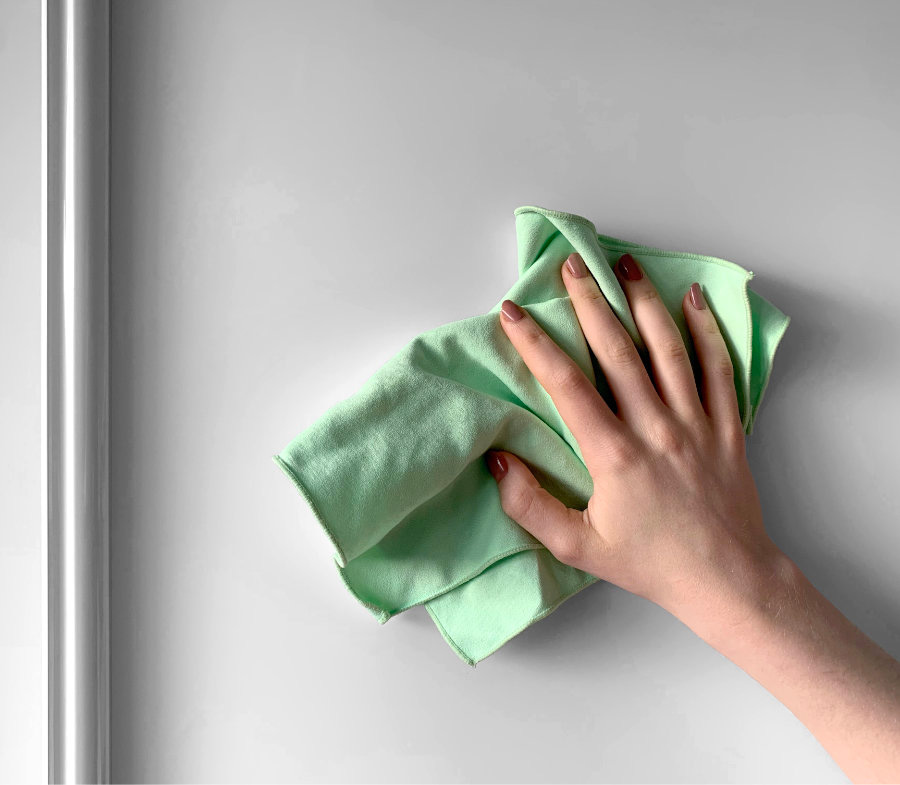
Use a clean microfibre cloth with a standard glass cleaner. Apply cleaner to the cloth rather than directly to the panel to avoid excess moisture near edges or frames.
Wipe evenly and finish with a dry cloth to remove streaks.
Clean mirrors side-to-side rather than in circles to reduce visible streaking.
MFC panels should be cleaned with a soft, slightly damp cloth. Avoid soaking the surface or using strong cleaning products.
Dry immediately after wiping.
A barely damp cloth is enough—too much moisture can affect panel edges over time.
Frames are typically aluminium or steel and require minimal effort.
Use a damp cloth to remove dust and marks, followed by a dry wipe to prevent water marks.
For tougher marks, a small amount of diluted mild detergent works well.
Stick to soft cloths—abrasive pads can dull premium finishes like satin black or graphite grey.
The track and wheels are the most important parts to maintain—especially with bottom-rolling systems where the weight of the doors is carried along the floor.
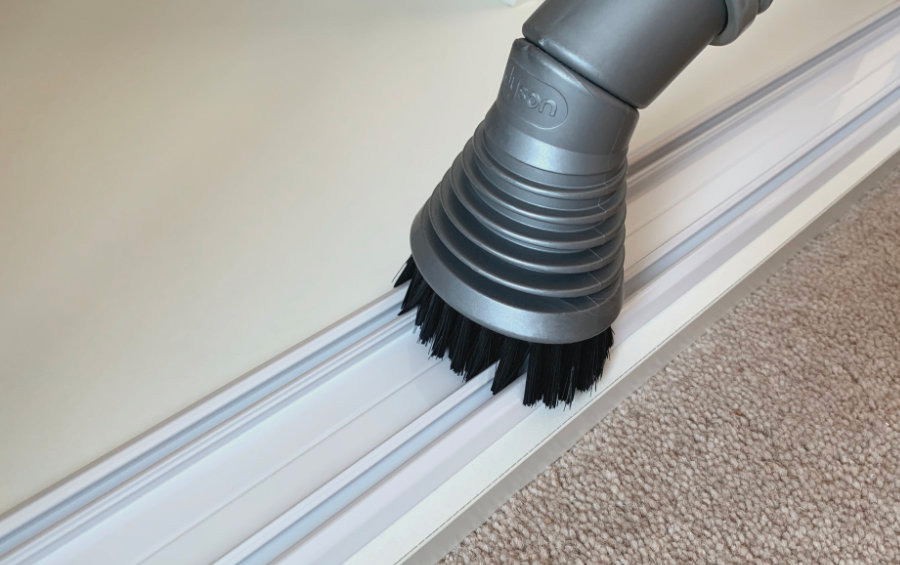
Dust, hair, and carpet fibres can gradually collect around the running gear—particularly in carpeted rooms—which can affect how smoothly the doors glide.
If you're unsure how your system is set up, you can review the process in our sliding wardrobe door installation guide.
If your doors feel heavy or noisy, cleaning the track and wheel area is usually all that’s needed to restore smooth movement.
A small amount of regular maintenance goes a long way. Keeping your sliding wardrobe doors clean helps:
Wardrobe Doors Direct sliding systems are built for long-term use, with a 10-year guarantee covering moving parts such as wheels, as well as manufacturing defects in MFC panels, giving you added peace of mind.
A quick 2-minute clean little and often is far more effective than occasional deep cleaning.
Sliding wardrobe doors are designed to be low maintenance, but over time you may need to make small adjustments to keep them operating perfectly—especially in homes where floors or walls may settle slightly.
In most cases, this can be resolved by adjusting the bottom wheels to realign the doors within the frame. This is a normal part of ownership and not a fault.
The wheels are what allow your doors to move smoothly, so keeping them clean is key to long-term performance.
Dust, fluff, hair, and carpet fibres can gradually build up around the bottom running gear—especially in carpeted rooms—affecting how easily the doors glide. A quick vacuum around the track and wheel area helps prevent this.
The top guide wheels can also be cleaned occasionally to remove any dust.
Small adjustments combined with regular cleaning will keep your doors running smoothly for years.
For more detailed guidance, see our sliding wardrobe door wheels and adjustment guide.
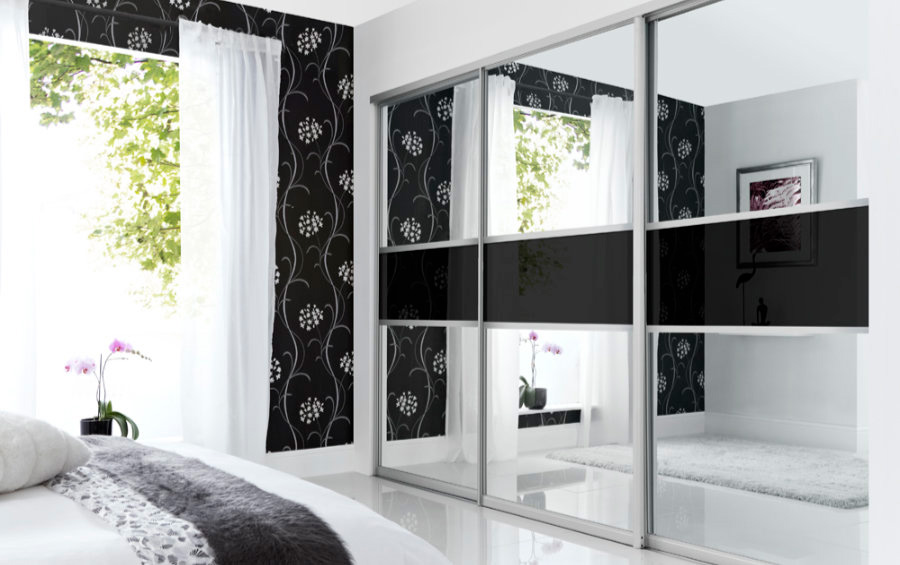
Great for reflecting light and opening up space, but they do show fingerprints more easily.
Satin mirror finishes are a practical alternative if you want a softer look with less visible marks.
Coloured glass panels are durable, wipe-clean, and ideal for modern interiors. If you're exploring design options, see our guide to glass sliding wardrobe doors and finishes - Coming soon.
A precise fit means fewer gaps, which reduces dust build-up compared to off-the-shelf options. If you're planning a new project, our guide to how to measure for sliding wardrobe doors explains how to achieve a perfect fit.
You can also explore more options and advice in our sliding wardrobe doors buying guide.
Consistent light cleaning is far more effective than occasional heavy cleaning.
A light clean every 1–2 weeks is ideal, with tracks and wheel areas cleaned monthly. This keeps both appearance and performance consistent.
This is usually caused by dust or debris in the bottom track or around the wheels. Cleaning these areas typically restores smooth movement. If problems persist, see our guide on fixing sliding wardrobe door wheels and alignment issues.
Very little. Aside from cleaning and occasional minor adjustments, the system is designed to be durable and low maintenance.
Use a standard non-abrasive glass cleaner for mirrors and glass, and a damp cloth for MFC panels and frames. Avoid harsh chemicals.
Cleaning sliding wardrobe doors doesn’t need to be time-consuming or complicated. With a simple routine focused on panels, frames, tracks, and wheels, you can keep your doors looking great and operating smoothly for years.
With made-to-measure sliding wardrobe doors, precise fit and quality components make ongoing care even easier—requiring only occasional cleaning and minimal adjustment over time.
Seeing finishes in your own space makes it easier to choose. You can:
Our guides are created by the Wardrobe Doors Direct design and technical team, specialists in made-to-measure sliding wardrobe doors and internal storage systems across the UK.
Call our team on 0800 035 1730.


We offer a custom design
service at NO extra cost.
Follow these simple guidelines to
get the perfect fit for your sliding
wardrobe doors.
The sliding wardrobe doors are
very easy to install so you don’t
have to be a DIY expert.
Request FREE samples to help
with the design process and
colour matching.