
REQUIRE A BESPOKE LOOK?
We offer a custom design
service at NO extra cost.

Planning and buying sliding wardrobe doors isn’t just a product decision — it’s a space planning project. The right choices around sizing, configuration, and design will determine how well your storage works for years to come.
This guide walks you through the complete process used by professionals and installers: from measuring your space correctly, to choosing between standard and made-to-measure systems, through to ordering and installation.
If you follow each step, you’ll avoid the most common (and costly) mistakes and end up with sliding wardrobe doors that fit perfectly, operate smoothly, and elevate your room design.
Before diving into details, here’s the full decision flow:
Understand layout, wall type, and usable opening
Capture width, height, and depth correctly
Number of doors + track layout
Fit precision vs budget flexibility
Finish selection, ordering, fitting
Treat sliding wardrobe doors as a “system”, not just panels — measurement, track space, and door overlap all work together.
Sliding wardrobe doors are one of the most efficient storage solutions for modern homes because they remove the swing clearance required by hinged doors.
Key advantages:
Explore styles and configurations here: Browse sliding wardrobe doors
If your bed or furniture sits close to the wardrobe opening, sliding doors are almost always the better choice.
Good planning reduces installation issues later.
Check:
Start with our sliding wardrobe door measuring guide
If you're unsure of layout size, read what size wardrobe you need (Coming soon)
Don’t assume walls are square — most UK homes have slight variations that affect door fit.
Measurement accuracy is the single most important factor in success.
Measure:
Full step-by-step guidance: sliding wardrobe door measuring guide
Always use the smallest width and height measurement — this prevents binding or track misalignment.
Your opening size determines how many doors you need.
Learn more here: sliding wardrobe door sizes guide.
Configuration breakdown: how many wardrobe doors you need.
| Opening Size | Recommended Doors |
|---|---|
| Small | 2 doors |
| Medium | 3 doors |
| Large | 3–4 doors |
| Wall-to-wall | 4+ doors |
Fewer doors create a cleaner aesthetic, but more doors improve access flexibility.
This is where most purchasing mistakes happen.
Compare options: standard vs made-to-measure wardrobe doors.
Learn more about bespoke options: made-to-measure sliding wardrobe doors.
If your space is not perfectly symmetrical, made-to-measure is almost always the better long-term investment.
Once sizing is confirmed, design becomes the creative stage.
You can customise:
Explore product ranges:
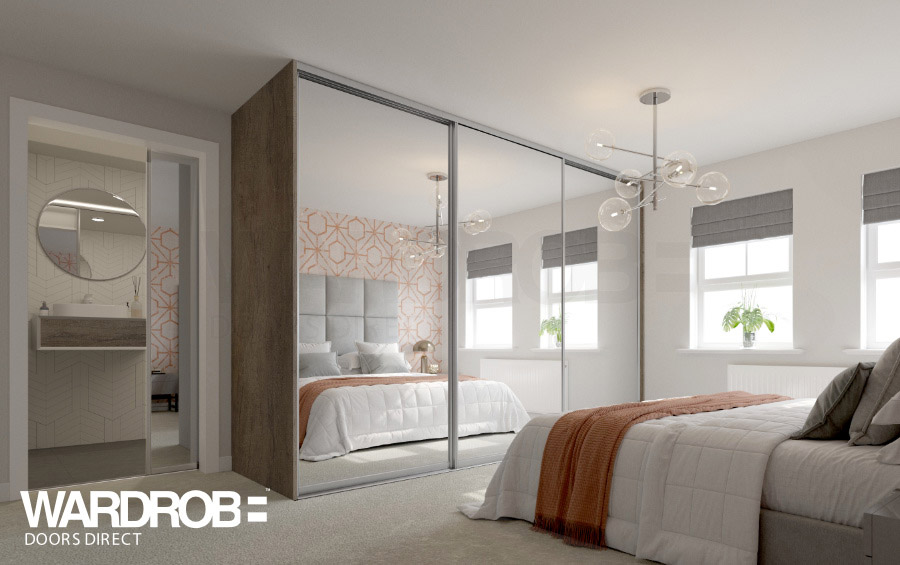
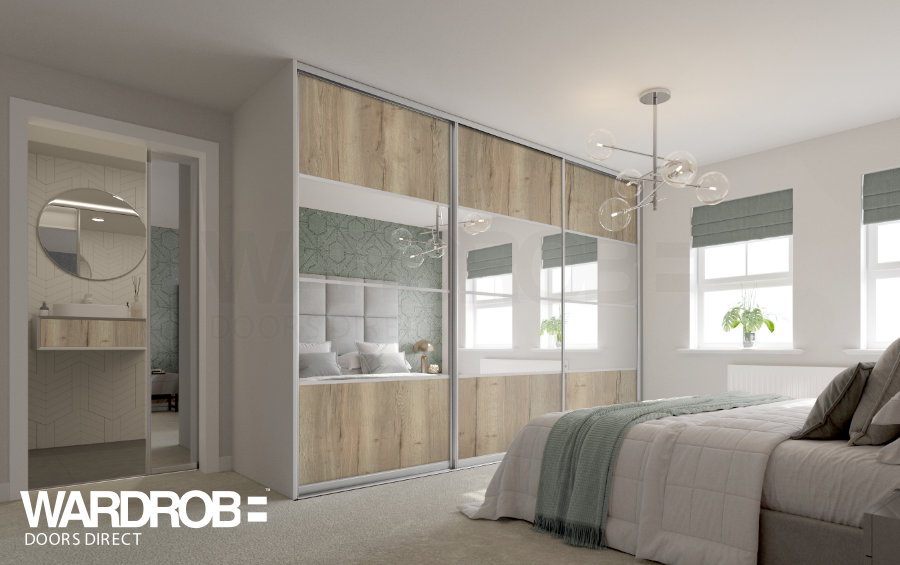
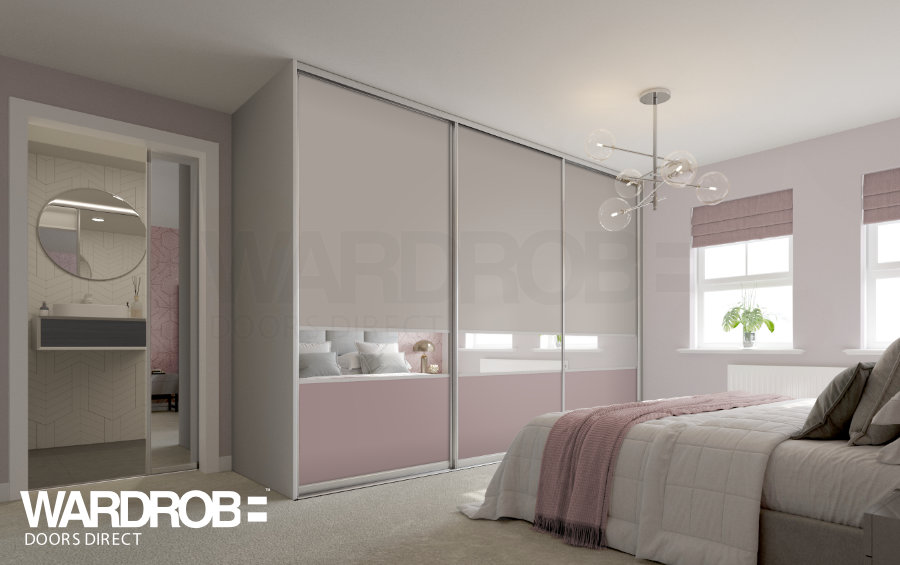
Mirror panels are one of the most effective ways to visually expand smaller bedrooms.
This decision affects how the wardrobe functions day-to-day.
Full comparison: sliding vs hinged wardrobe doors
If you need full wardrobe access simultaneously, hinged doors may still be better — otherwise sliding is usually the smarter option.
Choosing the right supplier determines long-term satisfaction.
Read: where to buy sliding wardrobe doors online.
Look for:
Always request samples before ordering — lighting conditions can significantly change how finishes appear.
Sliding systems are designed for DIY installation, but accuracy is essential.
Installation guide: sliding wardrobe door installation guide.
A level floor and straight track alignment are more important than force — never “push” doors into alignment.
Most fitting issues are measurement-related, not product-related.
You calculate this from your opening width and height. The number of doors and overlap system is then selected based on your span.
Yes — especially for alcoves, uneven walls, or full-wall installations where precision fit improves both appearance and function.
Most wardrobes use 2–4 doors depending on width. Larger spans require more doors to maintain smooth operation.
Yes. Most systems are DIY-friendly, but accurate measurement and track alignment are essential.
Sliding doors are better for saving space. Hinged doors are better for full access. The right choice depends on room layout.
Once you’ve planned your space, measured correctly, and chosen your configuration, you’re ready to design your final solution.
Start here: shop sliding wardrobe doors.
Seeing finishes in your own space makes it easier to choose. You can:
Our guides are written by the Wardrobe Doors Direct design and technical team, specialists in made-to-measure sliding wardrobe doors across the UK.
Call our team on 0800 035 1730.


We offer a custom design
service at NO extra cost.
Follow these simple guidelines to
get the perfect fit for your sliding
wardrobe doors.
The sliding wardrobe doors are
very easy to install so you don’t
have to be a DIY expert.
Request FREE samples to help
with the design process and
colour matching.