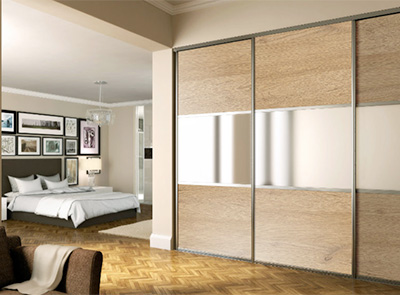
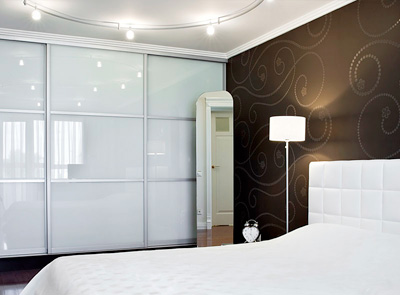
REQUIRE A BESPOKE LOOK?
We offer a custom design
service at NO extra cost.

Open-plan living can make homes feel bright and spacious, but there are many situations where separating part of a room becomes practical. Sliding room dividers offer a stylish and space-saving way to create privacy, define zones, or hide storage areas without building permanent walls.
Made-to-measure sliding room dividers are particularly useful for home offices, walk-in wardrobes, en-suite entrances, loft rooms, studio apartments, and multifunctional living spaces. Unlike hinged doors, sliding systems do not swing into the room, making them ideal where floor space is limited.
Whether you want to partition part of a bedroom, separate a dressing area, or divide an open-plan room, aluminium-framed sliding room dividers provide a flexible and modern solution tailored to your exact opening size and interior style.
Sliding room dividers are sliding door systems designed to separate part of a room or create a partition between spaces. They can be installed wall-to-wall, floor-to-ceiling, or even across corners to create enclosed areas within larger rooms.
Unlike permanent stud walls, sliding room dividers allow spaces to remain flexible. Doors can be left open to create an open-plan feel or closed to improve privacy and organisation.
Common uses include:
Wider sliding doors usually create easier everyday access and can make room divider layouts feel less cluttered visually.
There are two main types of sliding room divider systems: in-frame sliding room dividers and surface-mounted sliding room dividers.
In-frame sliding room dividers sit within a structural opening or partitioned area. The doors run inside top and bottom tracks fixed between walls, floors, or ceilings.
These systems are ideal for:
Because the doors sit neatly within the opening, in-frame systems usually create a cleaner and more integrated appearance.
Surface-mounted systems run across the face of a wall or opening rather than sitting within it. The doors slide externally across the opening and are often used where creating a recessed frame opening is not practical.
Surface-mounted systems can work particularly well for:
In-frame systems often provide a more architectural fitted appearance, while surface-mounted systems can simplify installation in existing rooms.
Standard room divider doors are available, but they are usually manufactured around fixed opening sizes and limited design options. In many homes, openings are rarely perfectly square or standard-sized.
Made-to-measure sliding room dividers are manufactured specifically for your opening dimensions, helping create a cleaner fit and more professional finish.
Benefits of made-to-measure sliding room dividers include:
Made-to-measure sliding room dividers are available up to a maximum height of 2480mm.
Although sliding room dividers are usually quoted as bespoke projects, the online sliding wardrobe door design tool can still be useful for exploring frame finishes, panel combinations, and layout ideas before requesting a tailored quotation.
Measure opening widths and heights in multiple places because floors, ceilings, and walls are rarely perfectly level across larger openings.
Sliding room dividers are particularly popular for creating walk-in wardrobe entrances and dressing areas. Mirrors, coloured glass, and soft neutral finishes can help create a premium fitted appearance while maximising usable floor space.
Related reading: Walk-In Wardrobe Sliding Doors
Sliding room dividers provide a practical way to create a dedicated workspace without permanently closing off part of a room.
Mirrored or lighter-coloured panels can help prevent smaller office spaces from feeling enclosed.
Related reading: Sliding Cupboard Doors for Garden Offices.
Sliding room dividers can also be used to partition off a corner of a room. If the sliding doors are positioned at 90 degrees to each other, they can create a compact enclosed area within a larger room.
This type of layout can work particularly well for:
At the end of the day, desks, toys, shelving, or storage can simply be hidden behind the sliding partition doors.
Corner partition layouts often work best with lighter glass or mirrored panels to avoid making enclosed areas feel too dark.
Single sliding doors are ideal for separating bedrooms from en-suite bathrooms without taking up valuable floor space.
Double-sided sliding room divider doors can also be used where a different appearance is needed on each side of the partition. Mirror and glass panels can be fitted back-to-back within the same aluminium-framed door, allowing features such as a full-length vanity mirror on the en-suite side while maintaining a coordinated finish within the bedroom.
Because mirrored and glass panels increase overall door weight when fitted back-to-back, aluminium-framed systems are particularly important for maintaining strength, stability, and smooth long-term operation.
MFC panels can also be used in double-sided sliding doors, although the panel finish must remain the same colour on both sides of the door.
Aluminium-framed doors with glass or mirrored panels are particularly suitable for humid or moist environments because aluminium will not absorb moisture.
Mirrored sliding room divider doors can help smaller bedrooms and en-suites feel brighter and more spacious by reflecting both light and surrounding space.
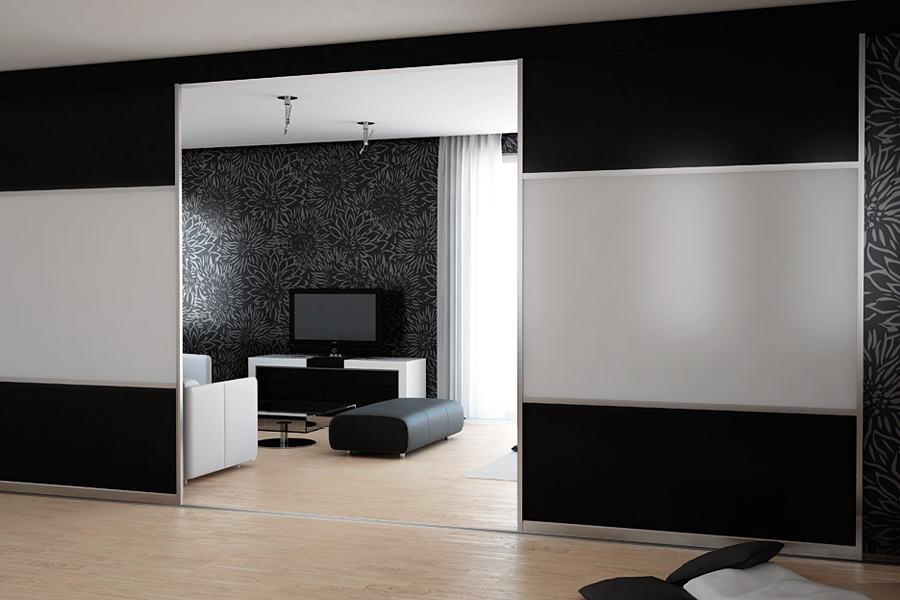
Sliding partition doors can help divide open-plan rooms into more functional zones without sacrificing natural light or flexibility.
Common applications include:
Single sliding doors comprise one door sliding across the front of an opening. These systems work particularly well where space is limited or where only partial room separation is needed.
Single sliding room divider doors are commonly used for:
Because only one door is required, they can often create a cleaner and more minimalist appearance than multi-door systems.
Sliding room dividers and sliding wardrobe doors can also be combined within the same run to create seamless fitted bedroom layouts.
For example, a wall of sliding doors may provide:
In these layouts, end panels are often used to form the entrance passage while maintaining a continuous sliding door appearance across the full wall.
Related reading:
Sliding room dividers are typically manufactured using aluminium-framed doors because aluminium offers greater strength, stability, and moisture resistance than many alternative materials.
Panel options include:
Aluminium frames are available in finishes such as:
Additional specialist glass options are also available for sliding room dividers, including clear fluted glass, reeded glass, bronze tinted glass, and grey tinted toughened glass.
Related reading: Specialist Glass Options for Sliding Wardrobe Doors & Sliding Room Dividers (Coming Soon)
Satin black aluminium frames combined with mirrored panels can create a striking industrial-style partition in modern interiors.
The best track option often depends on the floor type, installation method, and whether the flooring is already installed.
Surface-mounted double top and bottom tracks are typically supplied as standard with sliding room divider systems.
Optional upgrades such as:
are usually specified separately depending on the project layout and installation requirements.
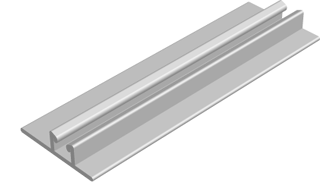
Surface-mounted tracks sit directly on top of the floor surface and are commonly used where recessed installation is not practical.
They can simplify retrofitting sliding room divider systems into existing rooms because minimal floor preparation is required.
Recessed tracks sit flush within the floor and create a cleaner, lower-profile finish.
These tracks can be recessed into:
Typically, a groove is created within the floor surface before the track is fixed securely using silicone adhesive.
Where ceramic flooring is being installed at the same time as the tracks, recessed systems can also be embedded directly into the floor structure for a more seamless finish.
Recessed tracks work best when planned early during renovation or flooring projects.
Wide recessed tracks can be installed beneath carpets and some softer flooring finishes. Depending on the floor surface, they may be fixed using screws, adhesive tape, or silicone adhesive.
Most sliding room divider systems are designed to be DIY-friendly, although careful preparation and measuring remain essential.
Sliding room dividers use bottom-rolling systems, meaning the weight is carried by the floor and bottom track rather than being suspended entirely from the ceiling.
This creates:
Typical installation considerations include:
Tracks are typically supplied oversized so they can be trimmed on site for an accurate fit.
Related guides:
| Opening Type | Recommended Configuration |
|---|---|
| Small openings / door openings | Single sliding door |
| Walk-in wardrobes | 2 or 3 sliding doors |
| Medium room dividers | 3 sliding doors |
| Wide partition openings | 4 sliding doors |
| Large open-plan spaces | Triple-track systems |
Triple-track systems can allow approximately two-thirds of the opening to become accessible at one time, making them useful for larger room divider installations.
Very symmetrical layouts can sometimes reduce practical access. Wider doors or triple-track systems may provide easier everyday usability in larger openings.
Recessed tracks often need to be considered before flooring is installed. Retrofitting recessed systems later can significantly increase installation complexity.
In en-suite bathrooms or moist environments, aluminium-framed glass or mirrored panels are usually more suitable than timber-based materials.
Double-sided glass and mirrored doors can become considerably heavier than standard panel combinations, making high-quality aluminium frames and running gear particularly important.
Older properties, loft rooms, and wider openings are rarely perfectly square. Made-to-measure sliding room dividers usually provide a cleaner fit and more professional finish.
Ordering samples before finalising your design can help avoid expensive colour or finish mistakes later.
Most sliding room divider systems are designed to be DIY-friendly. Accurate measuring and careful track installation are usually the most important parts of the project.
Yes, standard-size room divider doors are available. However, made-to-measure sliding room dividers usually provide a better fit, more flexibility, and a cleaner appearance for wider or non-standard openings.
In-frame systems sit within an opening or partition structure, while surface-mounted systems slide externally across the face of a wall or opening.
Yes. Aluminium-framed sliding room dividers with mirrored or glass panels are particularly suitable for humid environments because aluminium does not absorb moisture.
Yes. Made-to-measure systems are often ideal for loft spaces because they can be designed around awkward layouts and sloping ceilings.
Yes. Sliding room dividers and wardrobe doors can be integrated into one continuous fitted run to combine storage and room partitioning within the same design.
Sliding room dividers provide a stylish and practical way to separate spaces without permanently closing rooms off. Whether you are creating a walk-in wardrobe, dividing an open-plan room, or separating a bedroom from an en-suite, made-to-measure sliding partition doors offer flexibility, space-saving practicality, and modern design.
With aluminium frame finishes, mirrored and glass panels, woodgrain options, and bespoke layouts available, sliding room dividers can be tailored to suit both contemporary and traditional interiors.
Because many room divider projects are bespoke, it is worth seeking advice on layouts, track options, panel configurations, and installation requirements before ordering.
Contact the design team for a bespoke quotation on sliding room dividers and partition doors.
Seeing finishes in your own space makes it easier to choose. You can:
Our guides are written by the Wardrobe Doors Direct design and technical team, specialists in made-to-measure sliding wardrobe doors across the UK.
Call our team on 0800 035 1730.
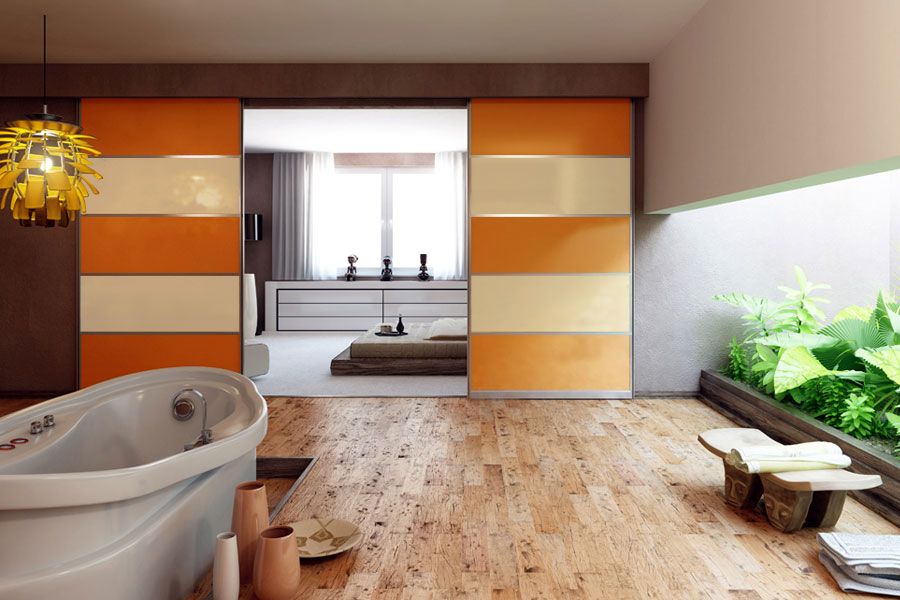


We offer a custom design
service at NO extra cost.
Follow these simple guidelines to
get the perfect fit for your sliding
wardrobe doors.
The sliding wardrobe doors are
very easy to install so you don’t
have to be a DIY expert.
Request FREE samples to help
with the design process and
colour matching.