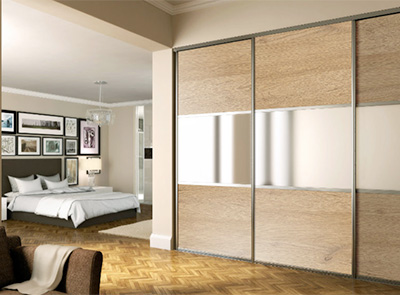
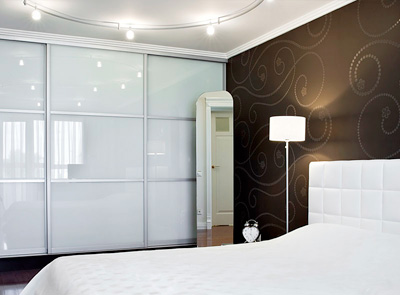
REQUIRE A BESPOKE LOOK?
We offer a custom design
service at NO extra cost.

Walk-in wardrobe sliding doors are increasingly used to create enclosed dressing rooms, walk-through wardrobes and bedroom-to-en-suite layouts in modern homes. Whether dividing part of a master bedroom, concealing a dressing area or creating a boutique hotel-inspired walk-in wardrobe, sliding doors offer a stylish and practical way to separate spaces without making the room feel enclosed.
Unlike traditional sliding wardrobe doors designed simply to cover a fitted wardrobe opening, walk-in wardrobe sliding doors are often used as architectural room dividers or full-width entrances to enclosed dressing spaces. This means the opening type, door layout, visibility from both sides of the doors and the overall flow between the bedroom, dressing area and en-suite all become important considerations.
Made-to-measure sliding wardrobe doors are particularly useful for walk-in wardrobe projects because openings are rarely standard sizes. They can be customised to suit wall-to-wall installations, recessed spaces, floor-to-ceiling layouts and walk-through wardrobe designs.
Walk-in wardrobe sliding doors are designed to enclose dressing or storage areas within bedrooms or adjoining spaces. Rather than opening outward like hinged doors, the panels slide horizontally for access while maintaining a cleaner and more space-efficient layout.
They are commonly used to:
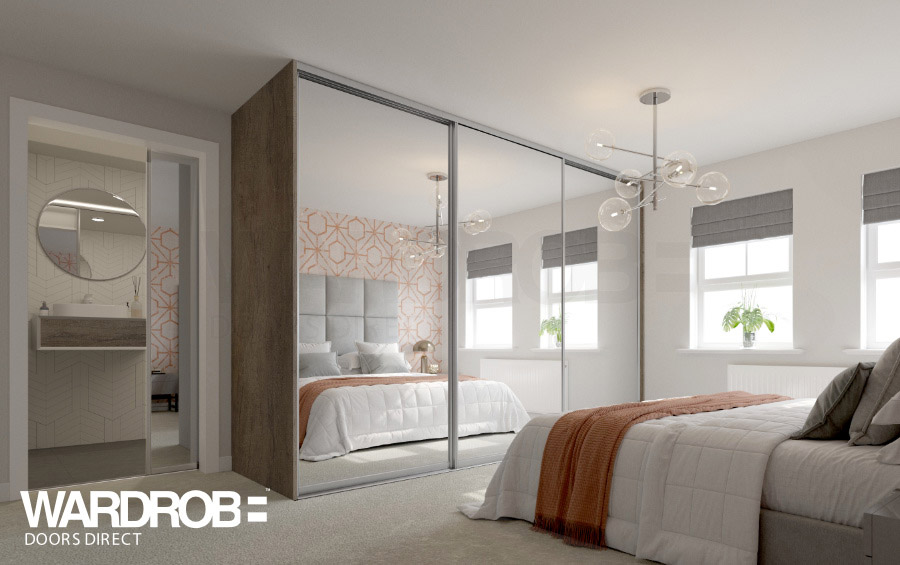
Many contemporary homes now use walk-through wardrobe layouts where the dressing area sits between the bedroom and en-suite bathroom. Sliding doors help define these spaces while maintaining a streamlined fitted appearance.
Mirrored and glass sliding doors are particularly popular because they reflect light around the room and help create a more luxurious dressing-room feel.
Many walk-in wardrobe sliding door systems also overlap with sliding room divider doors, particularly in open-plan bedrooms and dressing areas where larger openings need to be separated without using permanent walls.
For smaller openings and en-suite entrances, some homeowners may also consider pocket sliding doors where the door slides into the wall cavity.
Floor-to-ceiling mirrored sliding wardrobe doors can help smaller bedrooms feel larger while creating a cleaner built-in appearance.
Sliding wardrobe doors can be adapted to a wide range of walk-in wardrobe layouts, from compact recessed dressing areas to full bedroom-to-en-suite walk-through designs.
This is one of the most popular layouts in modern master bedrooms. The walk-in wardrobe sits between the bedroom and en-suite, creating a natural transition between spaces.
Sliding doors can be used to:
This style of layout often works particularly well with mirrored or satin glass sliding doors because they help maximise light through the centre of the room.
Grey mirror and satin glass finishes often suit bedroom-to-en-suite walk-in wardrobes particularly well because they create a softer and more contemporary appearance than standard silver mirror.
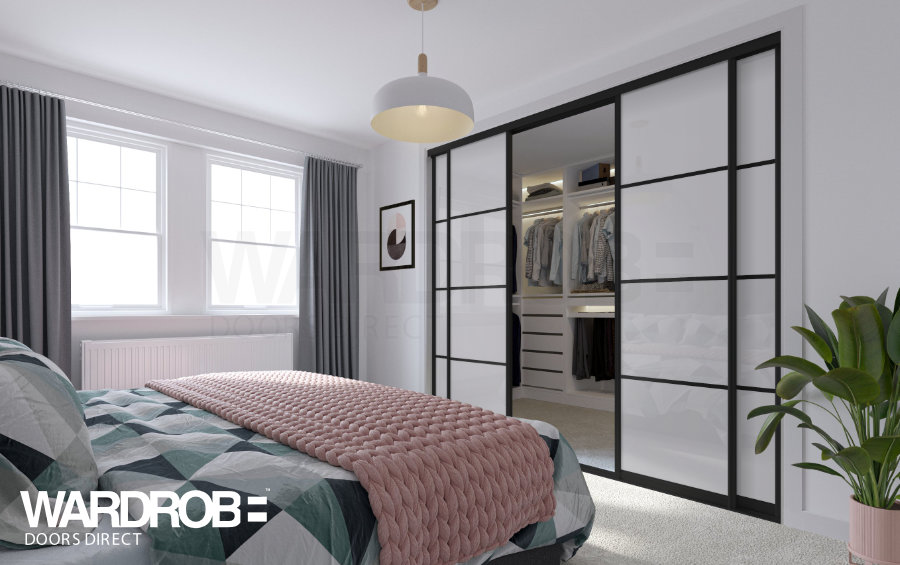
Some walk-in wardrobes are positioned behind a full wall of sliding doors. This can give the appearance of a sleek fitted feature wall while concealing an entire dressing space behind it.
These layouts are commonly used in:
Floor-to-ceiling sliding wardrobe doors can help emphasise ceiling height and create a more architectural appearance.
Sliding doors are also increasingly used behind feature bed walls where a hidden dressing area sits directly behind the sleeping area.
This type of layout can help introduce:
Surface-mounted sliding doors often work particularly well for these installations because the doors become part of the overall bedroom design.
These layouts often overlap with sliding room divider doors used to separate larger bedroom spaces.
Walk-in wardrobes are not always full dressing rooms. Smaller walk-in spaces can also be created within alcoves, corners or recessed parts of a room.
Made-to-measure sliding doors help maximise these awkward spaces while maintaining a fitted appearance.
Related guides:
Wider sliding doors can help smaller walk-in wardrobe spaces feel less visually cluttered by reducing the number of vertical frame divisions.
One of the most important parts of designing a walk-in wardrobe is understanding how the sliding doors will be positioned within the opening.
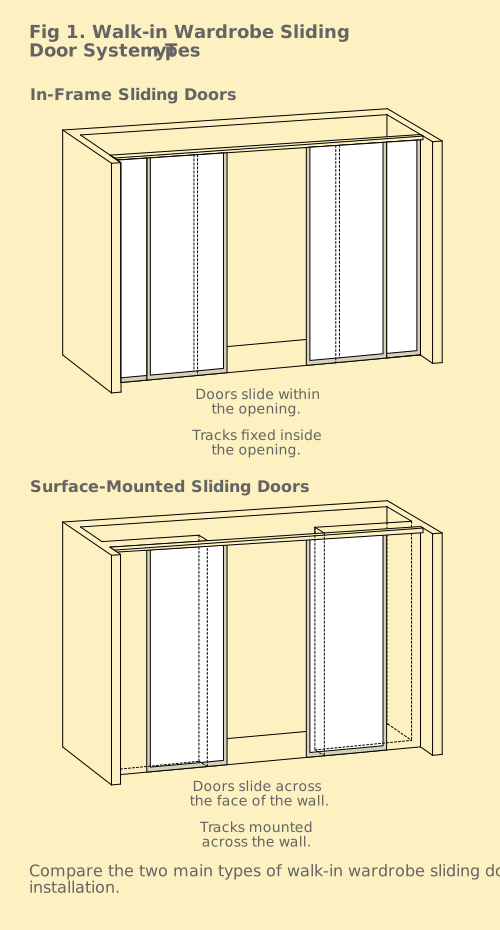
In-frame sliding wardrobe doors are fitted within a structural opening or framework. The top and bottom tracks are fixed inside the opening, with the doors sliding past one another for access to the walk-in wardrobe.
These systems are sometimes referred to as:
This type of installation is commonly used for:
The doors remain neatly within the opening itself, helping maintain a fitted built-in appearance.
This is often the most practical solution for larger openings because multiple sliding doors can overlap behind one another while still allowing wide access.
Made-to-measure sliding wardrobe doors are particularly useful for these installations because they can be sized precisely to the opening.
Three-door and four-door layouts are often more practical for wider walk-in wardrobes because they improve accessibility without creating excessively wide or heavy doors.
Surface-mounted sliding doors are fitted across the face of a wall or opening rather than sitting recessed fully within it.
These are also commonly called:
With this type of system, the doors slide across the front of the opening to reveal the walk-in wardrobe behind.
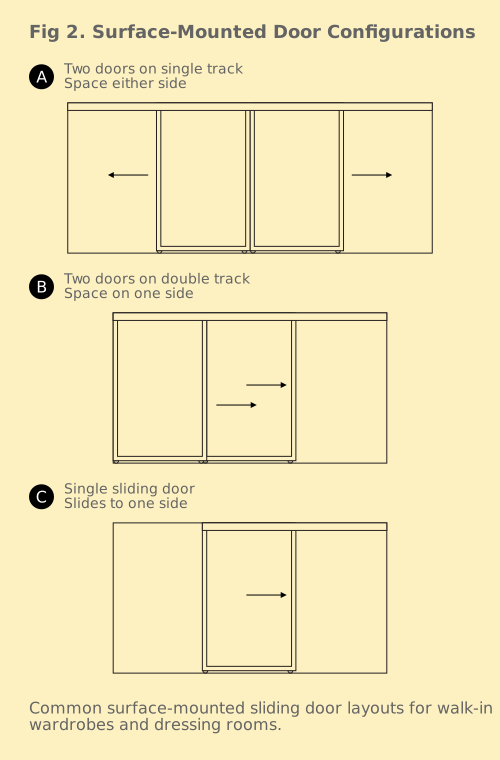
Common surface-mounted layouts include:
Surface-mounted systems are often used in:
These layouts can help create a more architectural appearance because the sliding doors become part of the bedroom design rather than sitting recessed within an opening.
Single sliding doors can work particularly well for en-suite entrances where a cleaner and more minimal look is preferred over traditional hinged doors.
The frame type can significantly affect both the appearance and functionality of a walk-in wardrobe sliding door system.
Steel framed sliding doors are generally the more cost-effective option and are commonly used for in-frame walk-in wardrobe systems.
These are single-sided doors. This means the rear of the mirror or glass panels can be visible from inside the walk-in wardrobe.
The wheels and running gear are also attached to the rear of the doors, so they remain visible internally.
For many projects this is perfectly practical, particularly where:
MFC panels are double-sided, meaning the same finish appears on both sides of the
Mirror and coloured glass panels, however, can appear different on the front and rear of steel framed doors because the rear side of the material is visible internally.
You can compare the differences in more detail in this guide to steel vs aluminium sliding wardrobe doors.
Steel framed sliding doors are often a practical solution for enclosed walk-in wardrobes where the inside face of the doors is less visible during everyday use.
Aluminium framed sliding wardrobe doors are generally considered the more premium solution for walk-in wardrobe installations.
One of the biggest advantages is that aluminium framed systems can be double-sided. This allows mirror and glass panels to be installed back-to-back so the doors look attractive from both the bedroom side and inside the walk-in wardrobe itself.
The wheels and running gear are also integrated into the top and bottom rails, meaning they cannot be seen from either side of the doors.
Because double-sided mirror and glass doors contain additional panel materials, they are heavier than standard single-sided systems and will normally require two people for carrying and installation.
This makes aluminium systems particularly well suited to:
Additional benefits include:
Single top and bottom track systems are also available in anodised silver finishes, including:
For larger openings, extra tall sliding wardrobe doors and extra wide sliding wardrobe doors can also be used depending on the overall layout.
Double-sided aluminium sliding doors can help create a much more premium appearance in open dressing rooms because both sides of the doors remain visually finished.
Single sliding doors are increasingly used directly between bedrooms and en-suites where a softer and more contemporary transition is preferred. Unlike traditional hinged bathroom doors, sliding doors help maintain cleaner sightlines while taking up less usable floor space. For bedroom-to-en-suite applications, aluminium framed sliding doors with mirror or glass panels are generally the preferred option.
This is because aluminium systems are better suited to humid environments typically found near en-suite bathrooms. Mirror and glass panels are also more suitable for these layouts because they are less susceptible to moisture exposure while helping maintain a lighter and more reflective appearance between the bedroom, dressing area and en-suite.
Steel framed doors are usually less suitable for these applications because prolonged moisture exposure could potentially affect the steel over time. MFC panels are also not generally recommended close to en-suite environments due to the risk of moisture-related warping. Satin glass panels can work particularly well where a softer matt finish is preferred over reflective gloss glass or mirrored panels.
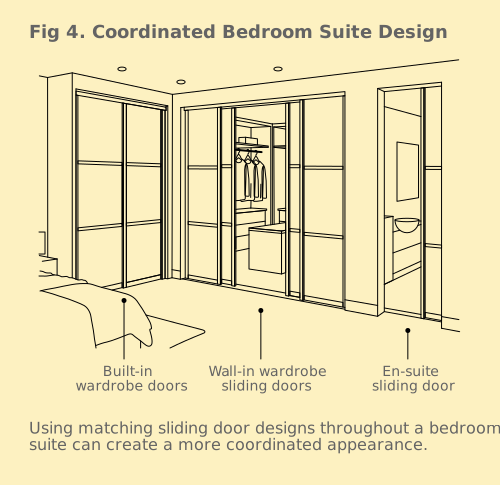
Sliding doors used between bedrooms, walk-in wardrobes and en-suites can also be designed to match adjoining fitted wardrobe or walk-in wardrobe doors. Using matching panel layouts, frame finishes and glass or mirror combinations throughout the bedroom can help create a more coordinated and architectural appearance.
For smaller en-suite entrances, some homeowners may also consider pocket sliding doors where the door slides fully into the wall cavity rather than across the face of the opening.
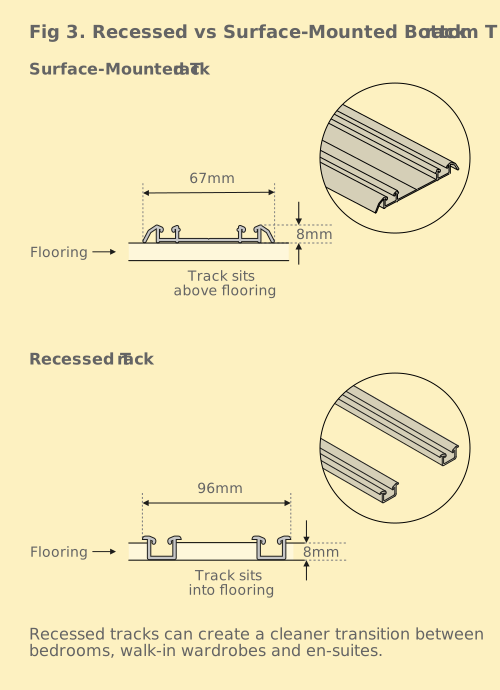
Recessed bottom tracks can help create a cleaner and more seamless transition between bedroom, walk-in wardrobe and en-suite spaces.
Walk-in wardrobe sliding doors do not need to be simple full-height panels. Split panel layouts can help turn the doors into a stronger design feature within the room itself.
Popular layouts include:
These designs allow different materials and finishes to be combined, including:
Split panel designs can work particularly well in larger walk-in wardrobe spaces because they help break up wider door areas visually while introducing a more furniture-style appearance.
For more inspiration, see:
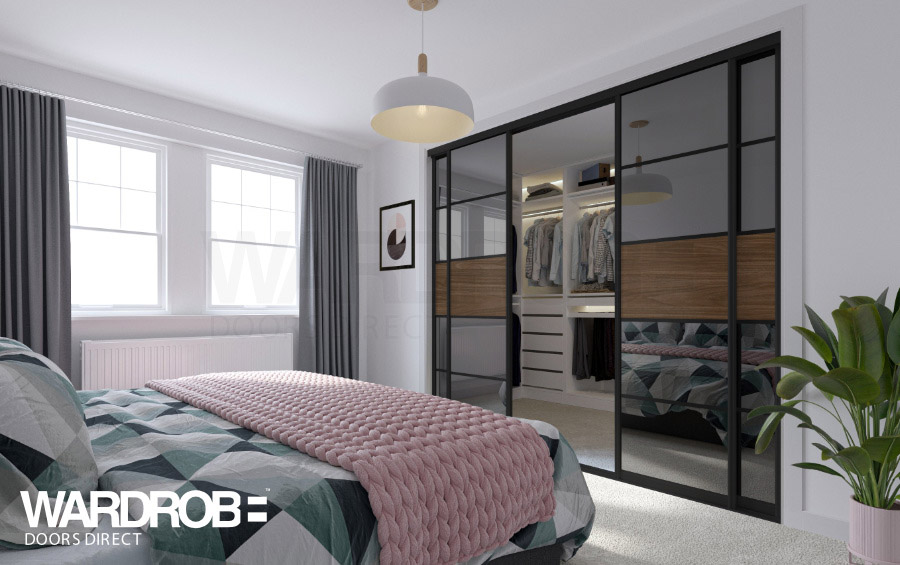
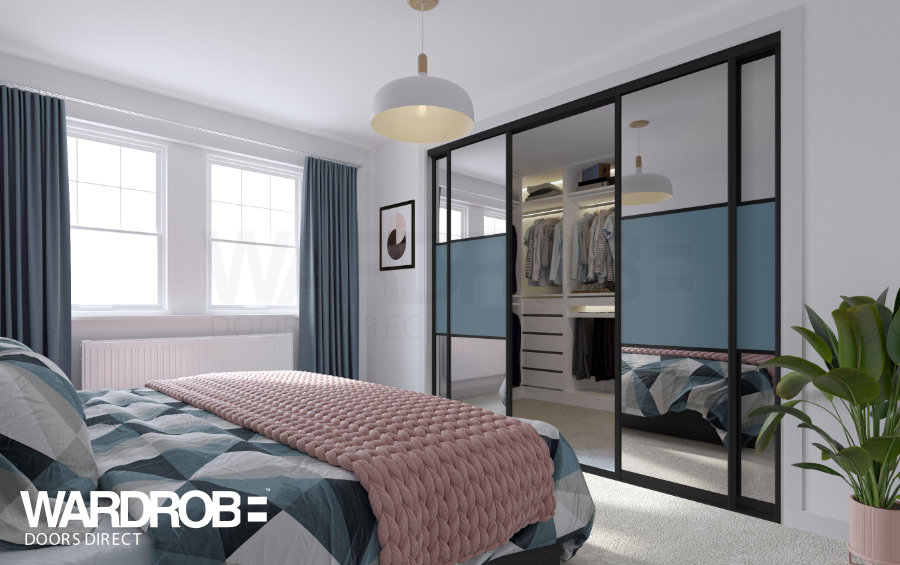
Combining mirrored centre panels with coloured glass or woodgrain outer panels can help introduce a softer and more bespoke bedroom design.
Before choosing sliding doors for a walk-in wardrobe, there are several practical factors worth considering.
Sliding doors overlap, meaning only part of the opening can be accessed at one time. Wider openings may benefit from additional doors or triple track sliding wardrobe doors.
If the inside of the wardrobe will remain visible regularly, the internal appearance of the doors becomes more important. Double-sided aluminium systems are often preferred for these layouts.
Mirrored sliding wardrobe doors can also help reflect additional light around dressing spaces.
Walk-in wardrobes and dressing rooms should have good lighting, particularly where darker mirror or glass finishes are used.
Integrated LED lighting can help improve visibility inside enclosed dressing areas.
Consider:
Before ordering, it is also worth reviewing the measuring guide for sliding wardrobe doors and the sliding wardrobe door installation guide.
Always plan where the sliding doors will stack when open so they do not obstruct shelving, drawers or walkways inside the wardrobe.
Yes. Sliding doors work particularly well for walk-in wardrobes because they save space, improve room flow and help separate dressing areas without making bedrooms feel enclosed.
Yes. Walk-in wardrobe sliding doors are often used as room-divider style systems to separate bedrooms, dressing rooms and en-suite areas while maintaining a fitted appearance.
The best option depends on the room layout and how visible the wardrobe interior will be. Aluminium framed mirror or glass sliding doors are often preferred for premium walk-in wardrobes and bedroom-to-en-suite layouts.
In-frame sliding doors fit within an opening and slide behind one another. Surface-mounted systems sit across the front face of the wall or opening and slide across it.
Yes. Aluminium framed mirror or glass doors are generally more suitable for bedroom-to-en-suite layouts because they are better suited to humid environments than steel or MFC-based systems.
Many made-to-measure sliding wardrobe doors are designed for DIY-friendly installation, although larger and heavier doors may require two people for lifting and positioning.
You can also compare sliding vs hinged wardrobe doors if you are still deciding which system is best for your room layout.
Whether you are creating a full dressing room, a walk-through wardrobe to an en-suite, or a wall-to-wall wardrobe area within a bedroom, made-to-measure sliding wardrobe doors can help introduce a cleaner and more functional layout.
With a wide range of mirrored, satin glass, coloured glass and split panel designs available in both steel and aluminium systems, walk-in wardrobe sliding doors can be tailored to suit both modern and traditional interiors.
Design your made-to-measure sliding wardrobe doors online today.
Seeing finishes in your own space makes it easier to choose. You can:
Our guides are written by the Wardrobe Doors Direct design and technical team, who specialise in made-to-measure sliding wardrobe doors supplied across the UK.
Call our team on 0800 035 1730.


We offer a custom design
service at NO extra cost.
Follow these simple guidelines to
get the perfect fit for your sliding
wardrobe doors.
The sliding wardrobe doors are
very easy to install so you don’t
have to be a DIY expert.
Request FREE samples to help
with the design process and
colour matching.