REQUIRE A BESPOKE LOOK?
We offer a custom design
service at NO extra cost.

Choosing the right sliding wardrobe door configuration is about far more than simply deciding how many doors you want. The layout you choose affects the appearance of the room, how much access you have to your wardrobe interiors, how practical the wardrobe is to use day-to-day, and even how spacious the room feels overall.
Wider sliding wardrobe doors can create a sleek minimalist appearance with larger uninterrupted panel sections, while narrower layouts may improve accessibility or work better around existing wardrobe interiors. The ideal setup depends on your room size, wardrobe width, storage layout, and personal design preferences.
This guide explains how to choose the best sliding wardrobe door layout for your space, including recommended door widths, triple-track systems, access considerations, and common planning mistakes to avoid.
There are several important factors to consider when deciding how many sliding wardrobe doors will work best across your opening.
In some situations, the decision will be driven by practicality. For example, you may already have wardrobe interiors installed with pull-out drawers, shelving units, or pull-down hanging rails that need to align with the door positions.
In other cases, the layout may be more design-led. Wider doors can create a luxury fitted-furniture appearance with large uninterrupted panel designs, while narrower doors can emphasise the height of the room and create a more segmented design.
The ideal configuration usually balances:
Before deciding on the number of doors, think carefully about how you will use the wardrobe every day rather than focusing purely on appearance.
The width of your sliding wardrobe doors can dramatically affect the appearance and feel of the room.
Wider doors tend to create:
Wider doors are particularly popular in:
Narrower doors can:
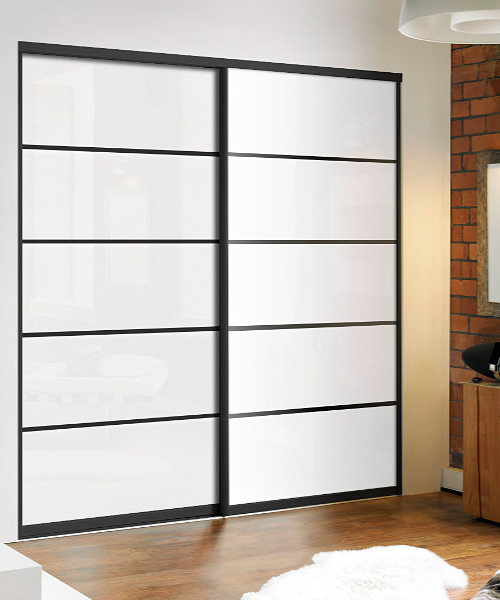
Industrial and black-framed sliding wardrobe doors often look particularly effective with fewer wider panels.
You may also find these guides useful:
As a general rule:
In most situations, we recommend a minimum sliding wardrobe door width of approximately 600mm for both appearance and practicality.
You may also find our guide to sliding wardrobe door sizes useful for understanding door width ranges, opening measurements, and made-to-measure sizing options.
If your available opening is particularly narrow, you may find our guide to narrow sliding wardrobe doors useful.
In most cases, the fewer doors involved in a design, the less costly the system will be. Wider doors and fewer panels can often help reduce costs.
The table below provides general guidance on the recommended number of sliding wardrobe doors based on the width of your opening.
| Opening Width | Typical Layout | Typical Layout |
|---|---|---|
| 600mm – 2400mm | 2 doors | Minimalist and contemporary wardrobes |
| 1800mm – 3580mm | 3 doors | Balanced access and room proportions |
| 2400mm – 4760mm | 4 doors | Large wall-to-wall wardrobes |
| 4760mm – 5000mm | 5 doors | Extra-wide fitted wardrobes |
These recommendations are intended as guidelines rather than strict rules. The ideal layout will still depend on:
Accurate measurements are essential when planning sliding wardrobe door configurations. You can read our measuring guide before finalising your layout.
For example, some customers choose extra-wide aluminium sliding wardrobe doors to create a more minimalist appearance across wider openings.
Read our guide to wide sliding wardrobe doors and extra-wide wardrobe layouts.
If you are planning to include soft-close mechanisms, minimum door widths become important.
Wider sliding wardrobe doors often feel smoother and more premium in operation, especially when paired with soft-close mechanisms.
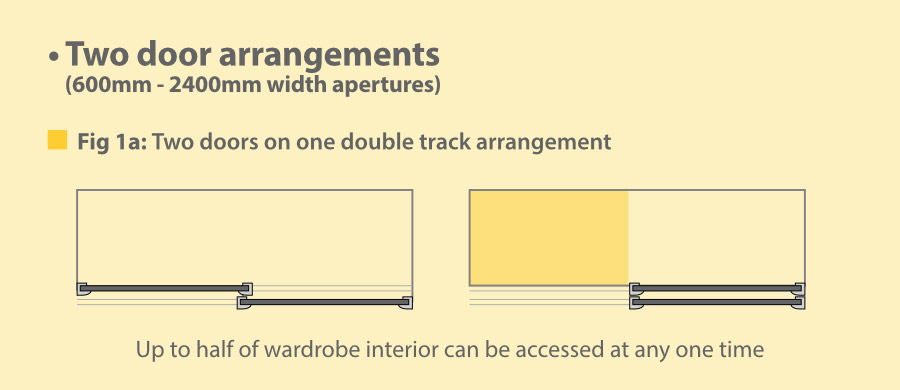
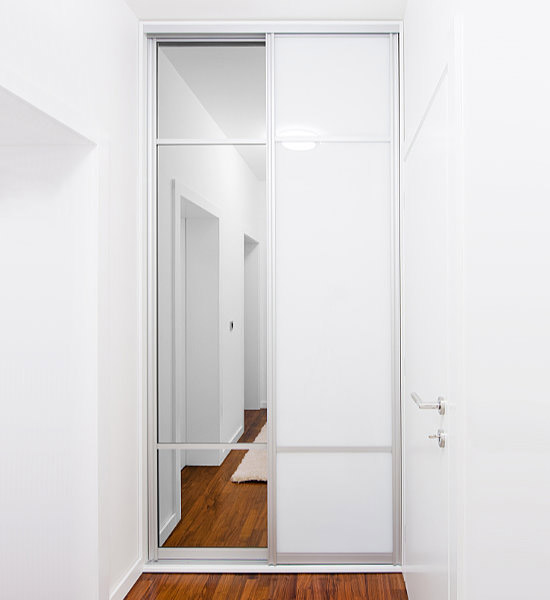
A 2-door sliding wardrobe configuration is one of the cleanest and most contemporary options available.
This layout usually works best for openings up to around 2400mm wide, although wider aluminium doors can sometimes be used where an extra-wide minimalist appearance is desired.
A two-door arrangement runs on a standard double-track system and allows access to approximately half of the wardrobe interior at any one time.
As door widths increase, the doors become heavier and more difficult to manoeuvre through staircases and tighter spaces within the home.
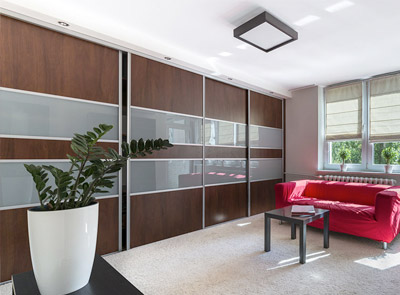
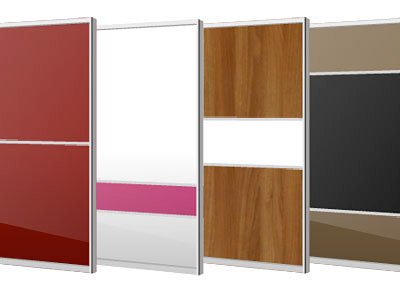
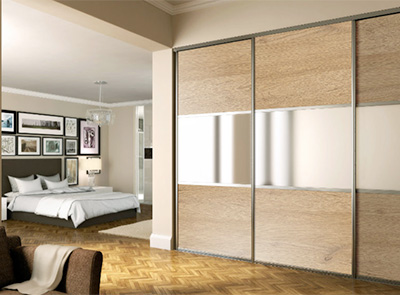
Wider sliding wardrobe doors can create a real statement within a bedroom, particularly with coloured glass, woodgrain or mirror panel combinations.
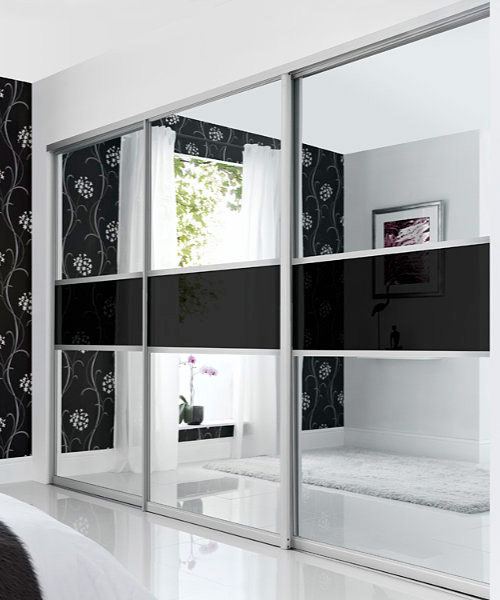
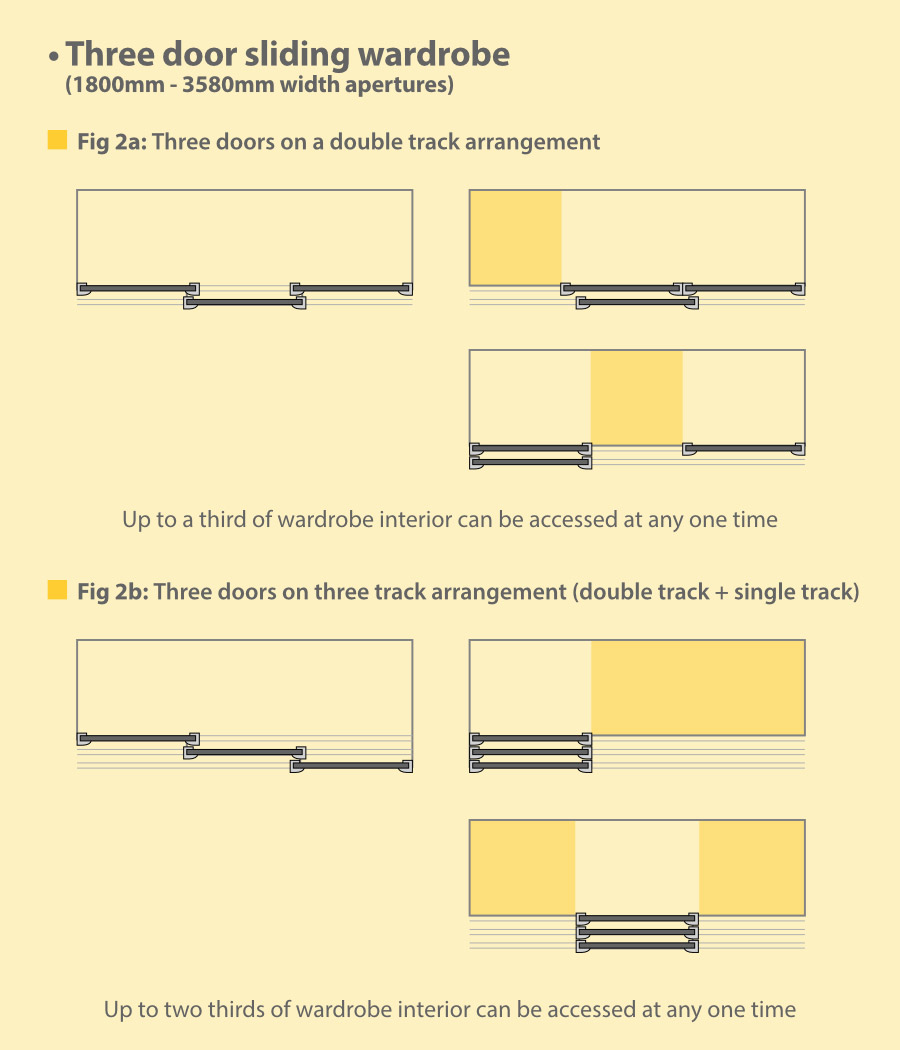
Three-door sliding wardrobes are often the ideal balance between practicality and aesthetics.
They work particularly well across medium and larger wardrobe openings and can provide improved accessibility compared to two extra-wide doors.
By default, a three-door arrangement uses a double-track system.
This means:
For wider three-door installations, this may still provide perfectly practical access.
A three-door wardrobe can also be installed on a triple-track system.
This arrangement allows the doors to stack behind one another, increasing the accessible opening to approximately two-thirds of the wardrobe width at one time.
Triple-track systems work particularly well when:
Triple-track systems use an additional rear track to improve accessibility across wider openings.
For more information, read our guide to triple-track sliding wardrobe doors.
Triple-track systems are often ideal when the wardrobe interior is divided into three equal sections.
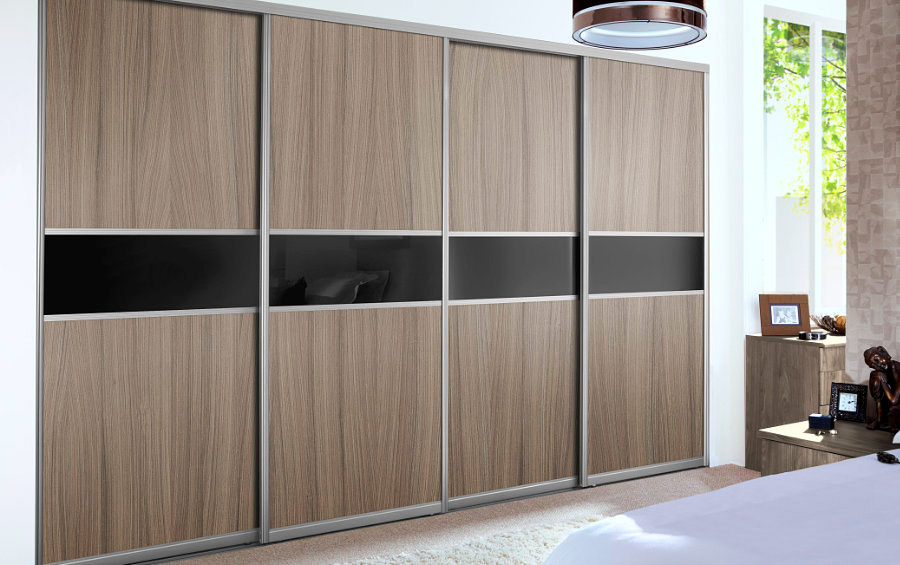
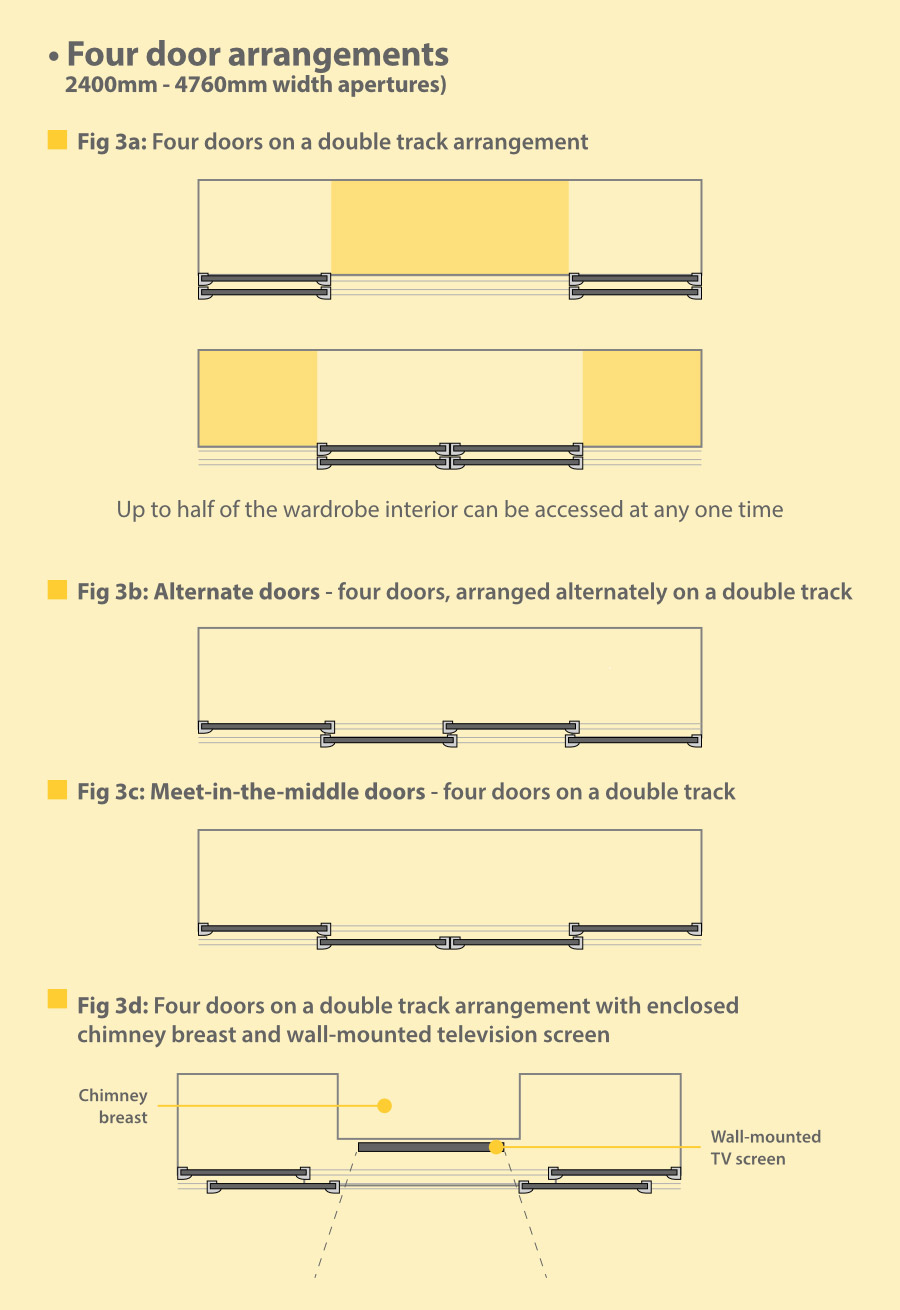
Four-door sliding wardrobes are often the best solution for larger wall-to-wall wardrobe installations.
This layout offers excellent flexibility and improves accessibility across larger openings without requiring excessively wide individual doors.
A four-door arrangement on a double-track system allows approximately half of the wardrobe opening to be accessed at one time.
This is the most commonly used four-door arrangement.
In this setup:
This creates a symmetrical appearance with two visible overlaps.
With this arrangement:
Both configurations work well in practice, although many customers prefer the meet-in-the-middle arrangement because it creates a neater and more symmetrical appearance.
Four-door systems are often ideal for wardrobes spanning the full width of a room because they improve flexibility without creating overly narrow doors.
A four-door arrangement can work particularly well when sliding wardrobe doors are installed across alcoves either side of a chimney breast.
For example, a television mounted on the chimney breast can remain visible when the two centre doors slide away from the middle.
You may also find these guides useful:
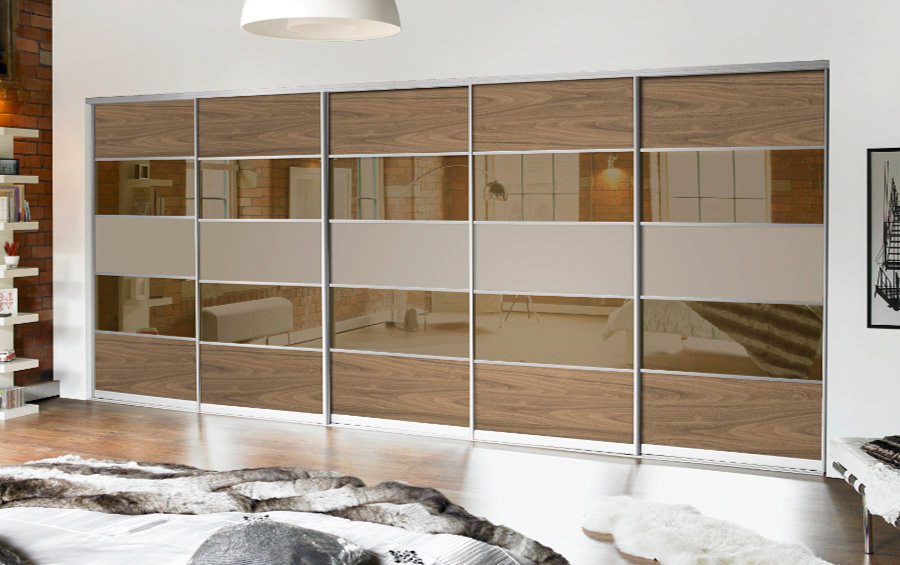
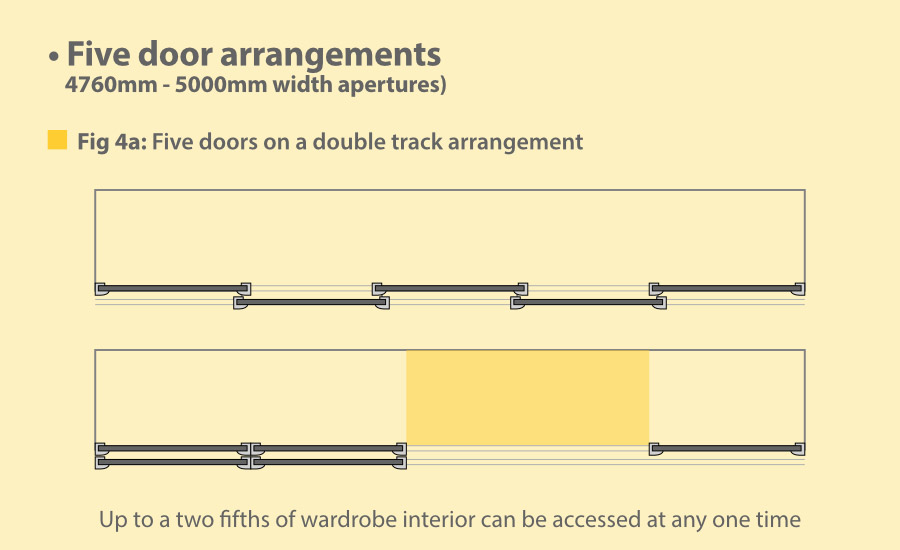
Five-door sliding wardrobe arrangements are generally recommended for openings wider than approximately 4760mm.
These larger installations are typically installed on double-track systems and can provide access to around two-fifths of the wardrobe interior at one time.
Five-door layouts are commonly used in:
On very wide wardrobes, increasing the number of doors usually improves practicality and manoeuvrability.
If you are installing sliding wardrobe doors in front of an existing wardrobe interior, it is important to think carefully about accessibility.
Items such as:
may all affect the ideal sliding wardrobe door configuration.
If your existing interiors are split into equal-width sections, matching the number of doors to the number of internal sections often works well.
However, in some cases, fewer wider sliding wardrobe doors can still successfully cover multiple narrower internal carcasses.
Many customers use our sliding wardrobe doors in front of IKEA wardrobe interiors and storage systems.
IKEA interiors commonly use:
If you plan to use pull-out drawers or accessories behind sliding wardrobe doors, it is important to ensure the door overlaps still allow practical access.
Always consider how far drawers and pull-out accessories need to extend before finalising your door widths.
If you are unsure which configuration will work best with your existing interiors, contact us before ordering with photographs and accurate measurements and we can help advise on the most practical arrangement.
The maximum track length we supply is 5000mm.
However, wider openings can still be accommodated by dividing the installation into multiple wardrobe sections.
For example:
This approach maintains smooth door operation while avoiding the long-term problems associated with joining multiple tracks together.
We do not recommend attempting to bridge openings wider than five metres by butting two tracks together, as joined tracks can reduce long-term performance and reliability.
Dividing very wide openings into multiple wardrobe sections often improves both reliability and visual balance.
Before ordering extra-wide sliding wardrobe doors, make sure you can physically manoeuvre the doors through your home to the installation area.
Things to consider include:
Wider doors can sometimes be difficult to transport upstairs or around narrow corners.
If you are concerned, it can be useful to create a simple full-size mock-up using cardboard or lightweight timber to test manoeuvrability before ordering.
You can also read our installation guide for more practical fitting advice.
Too many narrow doors can create unnecessary frame divisions and reduce wardrobe accessibility.
Always check drawer, shelving, and hanging rail access before finalising your layout.
Very wide doors may be difficult to manoeuvre through staircases or narrow hallways.
Made-to-measure sliding wardrobe doors usually provide cleaner proportions, improved access, and a more fitted appearance.
You can read more in our guide to standard-size wardrobe doors vs made-to-measure wardrobes.
Before ordering extra-wide doors, consider creating a simple cardboard mock-up to test access through your home.
The best number depends on your wardrobe width, room layout, and internal storage requirements. Smaller wardrobes often suit two doors, while larger installations may benefit from three, four or five doors for improved accessibility.
In most situations, we recommend a minimum width of around 600mm per door. Wider doors can create a cleaner appearance, although extremely large doors may become harder to manoeuvre.
Fewer wider doors often create a more contemporary appearance and may reduce overall costs. However, additional doors can improve accessibility on larger wardrobes.
A triple-track system adds an additional rear track behind a standard double-track arrangement. This allows more doors to stack behind one another and increases accessible wardrobe space.
Yes. Many customers install our sliding wardrobe doors in front of IKEA wardrobe interiors. It is important to ensure the door overlaps still allow access to pull-out drawers and accessories.
Openings wider than 5000mm can usually be divided into separate wardrobe sections using dividing panels rather than joining multiple tracks together.
Choosing the right sliding wardrobe door layout can dramatically improve both the appearance and practicality of your wardrobe.
Made-to-measure sliding wardrobe doors allow you to create the ideal balance between aesthetics, accessibility, storage, and usability.
Whether you prefer wide minimalist mirror doors, practical multi-door layouts, or triple-track systems for improved access, careful planning will help create a wardrobe that works beautifully for years to come.
Design your made-to-measure sliding wardrobe doors online today.
Seeing finishes in your own space makes it easier to choose. You can:
Our guides are written by the Wardrobe Doors Direct design and technical team, specialists in made-to-measure sliding wardrobe doors across the UK.
Call our team on 0800 035 1730.

We offer a custom design
service at NO extra cost.
Follow these simple guidelines to
get the perfect fit for your sliding
wardrobe doors.
The sliding wardrobe doors are
very easy to install so you don’t
have to be a DIY expert.
Request FREE samples to help
with the design process and
colour matching.